A better bathroom starts with the way you live
Before choosing the tile, think about the small details that shape your everyday routine.
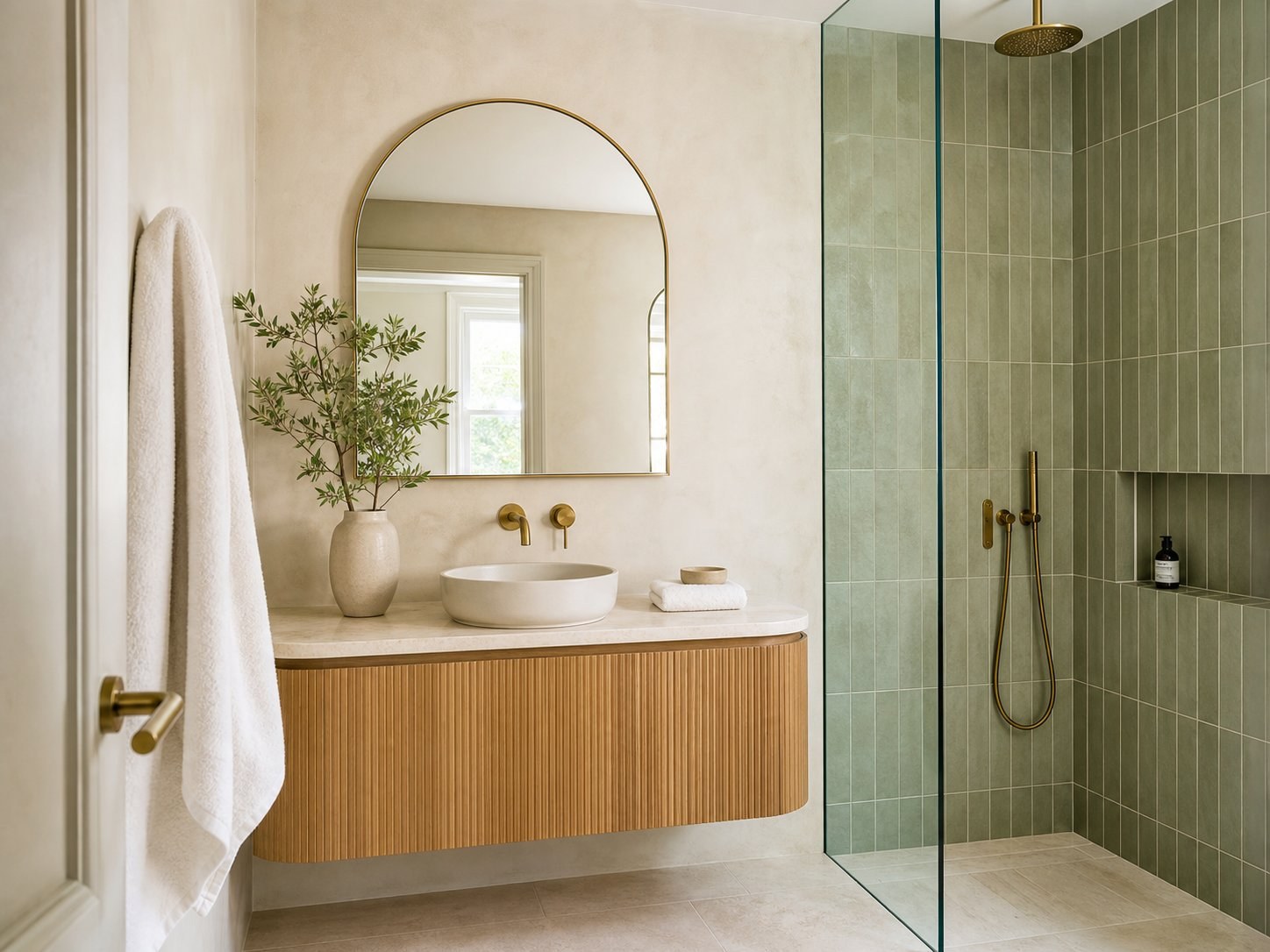
It is easy to begin a bathroom project with a beautiful tile sample. But the most satisfying improvements often start elsewhere: a towel within reach, better mirror lighting, a place for everyday essentials, or a shower that is easier to use. Let the routine lead the design.
Map the room to your routine
Think through a typical morning and evening. Who uses the room, which activities happen at the same time, and where do things tend to collect? Make a note of awkward movement, hard-to-reach storage, poor light, or surfaces that are difficult to clean.
Consider future needs as well as current preferences. Easier access, comfortable reach, and well-positioned fittings can belong in the brief from the start. Ask an appropriately qualified designer or professional to assess specific accessibility requirements.
Question the layout before moving it
Moving plumbing can add complexity, so understand the benefit before changing every fixture position. An improved vanity, a better door arrangement, or carefully designed storage may solve the main frustration while retaining much of the existing layout.
Draw the room and mark doors, windows, fixtures, and the space needed to use them. Consider where doors and drawers open. Product dimensions alone do not tell you whether the finished room will feel comfortable; the surrounding clearances matter too.
Give the hidden work a proper place in the scope
Waterproofing, substrate preparation, drainage, plumbing, electrical work, and ventilation need to be planned before the finishing layer. Ask which systems are proposed, how they work together, and what testing or inspections are required.
Do not assume that a product described as water-resistant makes the whole room waterproof. A bathroom is a coordinated system, and installation details matter. Qualified professionals should assess the work and the requirements that apply to the building.
Choose finishes for care as well as appearance
Compare how surfaces feel, how they are cleaned, and where they are suitable for use. Consider wet-area slip resistance, grout maintenance, water marking, and the care needs of natural materials. Look at samples beside the planned lighting and the other finishes.
- Provide useful lighting at the mirror, not only above the room.
- Choose storage around the items you actually keep.
- Plan towel and accessory positions before the final installation.
- Confirm that fixtures are compatible with the plumbing and room conditions.
Plan for the days when the room is out of use
Ask how long the bathroom may be unavailable and what could change the schedule. Drying or curing requirements, product delivery, inspections, and unexpected conditions can affect the sequence. Agree on how the work area and adjoining rooms will be protected.
A thoughtful brief brings the practical and visual decisions together. Explore our bathroom remodeling services for more planning considerations, then tell us what you would like to improve.
A thoughtful takeaway
Prioritize the routine, assess the existing layout, and make hidden work explicit. The best-looking bathroom still needs to work well behind the finishes.
This article offers general planning information, not a site-specific assessment or professional advice. Seek appropriately qualified guidance for your home and circumstances.